
UNCANDLE Buyer Guide
How to Make Scented Wax Melts at Home
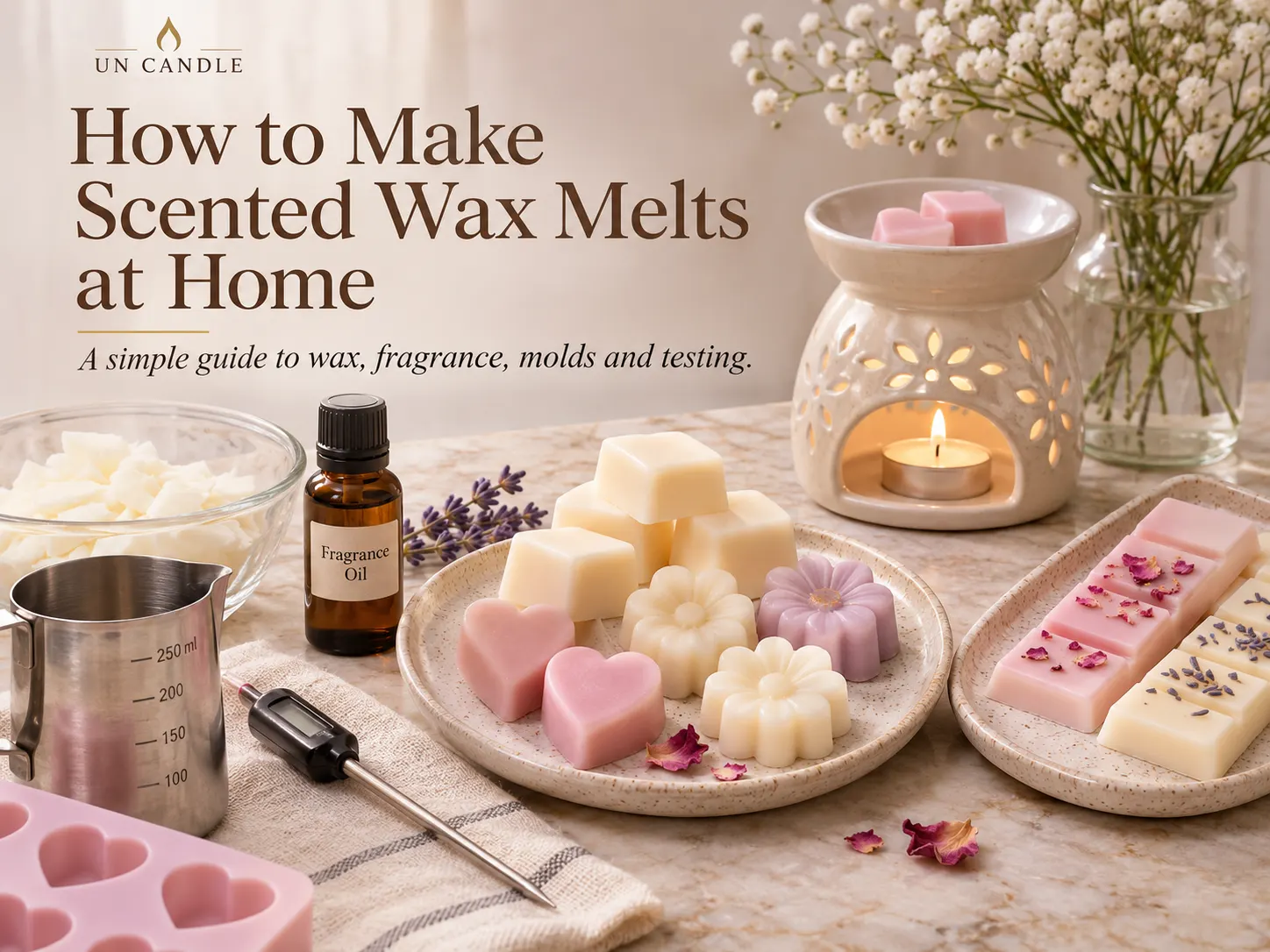
Want to learn how to make scented wax melts at home? You only need a suitable wax, candle-compatible fragrance oil, a mold, and a few basic candle-making tools.
Unlike scented candles, wax melts do not need a wick. Instead, a wax warmer gently heats the finished wax and releases fragrance into the room.
The process is simple: melt the wax, add fragrance at the recommended temperature, pour it into molds, and let it cool. The details matter, though, especially when choosing wax and deciding how much scent to add.
What Are Scented Wax Melts?
Wax melts are small pieces of scented wax designed for use in a compatible wax warmer.
They are available as cubes, hearts, flowers, snap bars, and other molded shapes.
When heated, the wax softens or melts, releasing fragrance without a burning wick.
Unlike a traditional candle, a wax melt does not use the wax itself as fuel. The wax can remain after much of its fragrance has been released.
This makes wax melts a different product category from container candles, even when they use similar fragrance materials.
What Supplies Do You Need to Make Wax Melts?
You do not need a large candle-making setup.
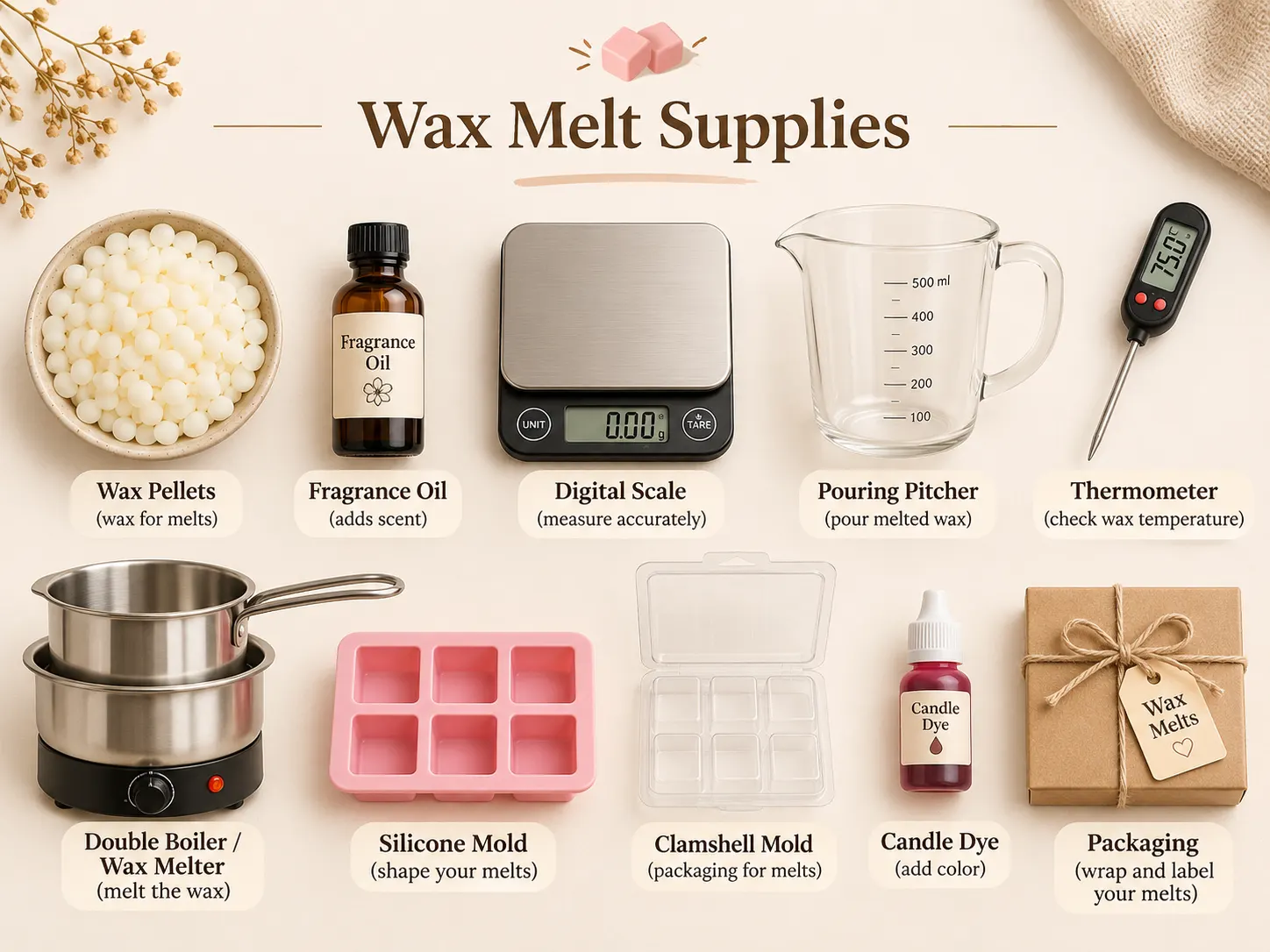
| Material or Tool | Purpose |
|---|---|
| Wax suitable for melts | Forms the finished wax melt |
| Candle-compatible fragrance oil | Provides scent |
| Digital scale | Measures wax and fragrance |
| Pouring pitcher | Holds the melted wax |
| Double boiler or controlled wax melter | Heats the wax |
| Thermometer | Checks processing temperature |
| Silicone or clamshell molds | Creates the final shape |
| Candle dye (optional) | Adds color |
| Suitable packaging | Protects the finished product |
Use equipment dedicated to candle making rather than returning it to food preparation.
Keep children and pets away from hot wax and fragrance materials.
Which Wax Is Best for Homemade Wax Melts?
For molded wax melts, start with a wax developed for pillars, molded products, or wax melts.
These waxes are generally firmer than soft container waxes, making them easier to remove from molds.
| Wax Type | What to Consider |
|---|---|
| Soy pillar wax | Mold release, surface appearance, fragrance performance |
| Paraffin pillar wax | Firmness, fragrance compatibility, finished texture |
| Soy-paraffin blend | Balance of hardness, processing, and scent release |
| Soft container wax | May be difficult to remove from silicone molds |
There is no single best wax for every fragrance.
Choose a wax that suits your mold, desired finish, and warmer. Review the wax supplier's technical instructions before production.
How to Make Scented Wax Melts: Step by Step
The following method works as a general starting point. Processing temperatures and fragrance limits depend on the specific wax you choose.
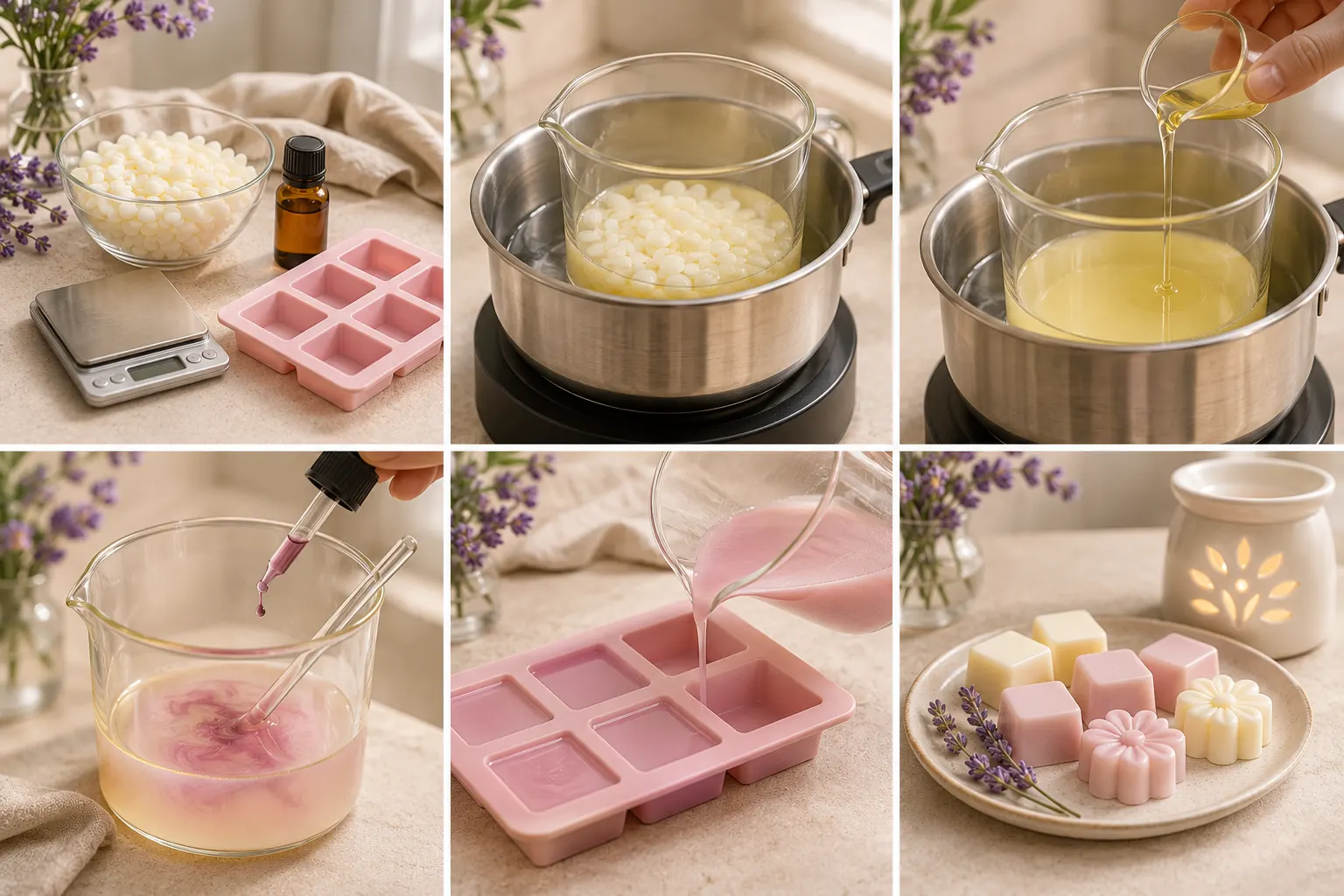
Step 1: Prepare Your Materials
Clean and dry the molds. Place them on a level, heat-resistant surface.
Measure your wax and fragrance oil by weight, not by counting drops.
Keep a notebook nearby to record the formula.
Step 2: Melt the Wax
Place the wax in a pouring pitcher and heat it using a controlled double boiler or wax melter.
Stir gently as it melts.
Check the wax supplier's recommended heating temperature. Avoid overheating the wax or leaving it unattended.
Step 3: Add the Fragrance Oil
Once the wax reaches the recommended fragrance-addition temperature, add the measured fragrance oil.
Stir thoroughly according to the supplier's instructions.
Use a fragrance oil approved for wax melt applications, and check the recommended fragrance load.
Adding more fragrance than the wax can hold may cause poor performance, surface oil, or other problems.
Step 4: Add Color if Desired
A suitable candle dye can give wax melts a distinctive appearance.
Start with a small amount. Too much color may affect the look of the finished melt or leave residue in the warmer.
Color is optional. Plain cream or white wax melts can look just as attractive.
Step 5: Pour Into Molds
Allow the mixture to reach the wax supplier's recommended pouring temperature.
Pour slowly into the mold cavities without overfilling them.
For your first batch, simple silicone shapes or clamshell molds are easier to handle than intricate designs.
Step 6: Cool, Unmold, and Test
Leave the wax melts undisturbed until they have cooled and hardened.
Remove them gently from silicone molds, or close the clamshell packaging once the wax has set.
Follow any curing guidance supplied for the wax.
Before using or giving away your melts, test them in a compatible warmer according to the warmer manufacturer's instructions.
How Much Fragrance Oil Should You Add to Wax Melts?
Fragrance load is the amount of fragrance oil used relative to the weight of the wax.
The calculation is:
Fragrance Oil Weight = Wax Weight × Fragrance Load
For example, suppose you choose a formula with 200 g of wax and an 8% fragrance load.
| Ingredient | Weight |
|---|---|
| Wax | 200 غرام |
| Fragrance oil | 16 g |
| Total mixture | 216 g |
This is a calculation example, not a universal recipe.
Some waxes can accept more fragrance than others. The appropriate amount also depends on the fragrance supplier's limits and the finished product's performance.
Do not add extra oil simply because the first test smells weak.
Why Are My Wax Melts Not Strong Enough?
A weak scent does not always mean the fragrance concentration is too low.
Consider these common problems.
| Problem | Possible Cause | ماذا يجب أن نتحقق |
|---|---|---|
| Weak fragrance when warmed | Wax and fragrance do not perform well together | Compatibility and warmer conditions |
| Oily surface | Excess fragrance or poor incorporation | Fragrance load and mixing |
| Melts stick to mold | Wax is too soft or not fully cooled | Wax type and cooling |
| Uneven surface | Pouring or cooling conditions | Processing temperature |
| Fragrance fades quickly | Fragrance has been released through repeated heating | Usage time and warmer settings |
Always test with the same wax, fragrance, mold, and warmer setup when comparing batches.
Changing several variables at once makes it difficult to understand why performance changed.
How Should You Package and Store Wax Melts?
Store finished wax melts in a cool, dry place away from direct sunlight and excessive heat.
Suitable packaging can help protect the shape, reduce contamination, and preserve the product's appearance.
Common options include clamshell packs, sealed pouches, cartons, and small rigid containers.
If you plan to sell wax melts, the packaging also needs to support the product's labeling and safety instructions for the target market.
Keep the product out of children's and pets' reach. Use only a warmer designed for wax melts, and follow its operating instructions.
Can You Turn Homemade Wax Melts Into a Product Collection?
Yes, but a repeatable product needs more than an attractive mold.
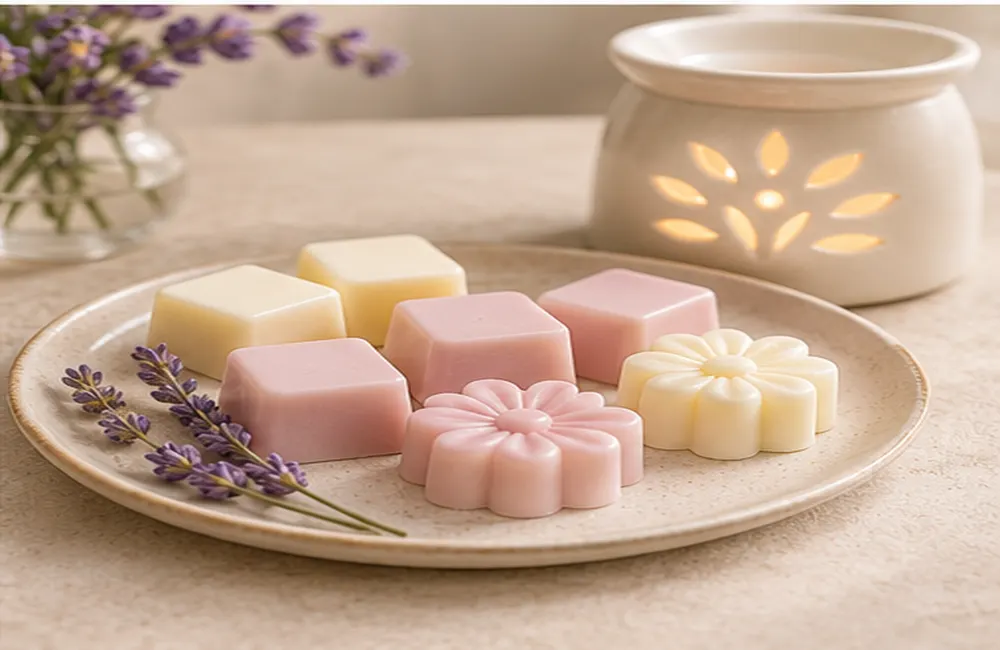
For a small commercial collection, consider:
- Consistent piece weight
- Fragrance performance between batches
- Wax hardness and mold release
- Packaging compatibility
- Product appearance during storage and shipping
- Clear usage instructions
- Fragrance and batch traceability
A heart-shaped wax melt for Valentine's Day may look appealing, but it still needs to remain stable in packaging and release fragrance effectively.
For brands considering an expanded home fragrance range, UNCANDLE supports OEM and ODM product development and can discuss suitable fragrance, wax, design, and packaging requirements.
Any wax melt manufacturing availability and order conditions should be confirmed for the specific project.
الأسئلة المتكررة
Can I use soy wax to make scented wax melts?
Yes, but choose a soy wax suitable for molded products or wax melts. Some softer soy container waxes may be difficult to remove from molds.
Can I use essential oils in wax melts?
Some essential oils may be suitable, but not all perform well or are appropriate for heated wax products. Check the supplier's application guidance and usage limits.
Do wax melts need a wick?
No. Wax melts are designed to release fragrance in a compatible warmer rather than through a burning wick.
Why do wax melts lose their scent?
Repeated warming releases fragrance into the air. Over time, the remaining wax may produce less scent even though the wax is still present.
Do wax melts need to cure?
Some wax formulas benefit from resting before scent testing. Follow the specific wax supplier's guidance rather than applying the same curing time to every wax.
Final Thoughts
Making scented wax melts at home is a practical way to explore fragrance, color, and product design.
Start with a suitable wax, measure your ingredients carefully, and follow the recommended processing temperatures.
Once you find a formula you like, test it consistently before making larger batches.
For candle and home fragrance brands, the same principles—formula control, fragrance performance, and packaging compatibility—form the basis of successful product development.