
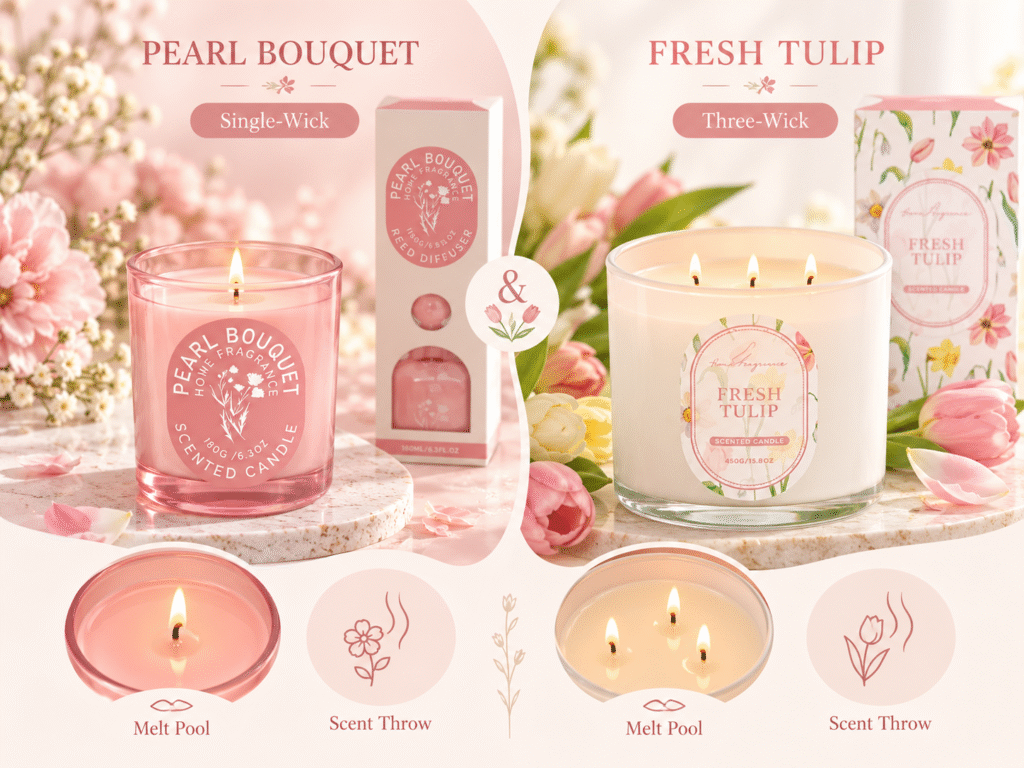
Choosing between single-wick and three-wick candles involves more than deciding how many flames a product should have.
Wick configuration affects how heat is distributed across the wax surface, how the melt pool develops, and how the candle performs during burning. It can also influence fragrance release, wax consumption, and the testing required before mass production.
For candle brands, importers, and wholesale buyers, the right choice depends on the container, wax formula, fragrance, target product performance, and retail positioning.
A three-wick candle is not automatically better than a single-wick candle. The goal is to match the wick configuration to the finished product.
Why Do Some Candles Have One Wick While Others Have Three?
The number of wicks is closely related to the candle’s dimensions and geometry.
A relatively narrow container may be designed around a single wick. A wider container may require multiple heat sources to achieve the intended melt pool and burning performance.
A single-wick candle concentrates heat around one central point. A three-wick candle distributes heat across several points, allowing multiple melt pools to develop and potentially merge as the candle burns.
However, wick count cannot be determined by container diameter alone. Wax composition, fragrance, wick characteristics, and the shape of the vessel also affect performance.
For example, two candles with the same wax weight may have different diameters and heights. Their wick requirements may therefore differ, even if they contain the same amount of wax.
For private label scented candles, wick configuration should be established during product development rather than selected solely for appearance.
How Does Wick Count Affect Melt Pool Development?
The melt pool is the area of liquid wax that forms around a burning wick.
Its development provides useful information about the interaction between the wick, wax, and container.
Single-Wick Candles
In a single-wick candle, heat is initially concentrated around the wick. The melt pool generally expands outward as the candle continues to burn.
If the wick is undersized or poorly matched to the formula and vessel, the candle may develop a narrow melt pool and leave excessive unmelted wax around the edges.
However, this does not mean that every single-wick candle will tunnel. A correctly developed single-wick system can perform well within its intended container.
Three-Wick Candles
A three-wick candle has several heat sources distributed across the wax surface.
Each wick develops its own melt pool, and these pools may eventually connect. This can help distribute heat across a wider container.
The result depends on wick spacing, wick size, container geometry, wax properties, and burning conditions.
If the wicks are positioned incorrectly or are not well matched to the formula, the candle may still develop uneven melting, excessive heat, or other performance problems.
The important point is that adding more wicks changes the entire heat-distribution system. It is not simply a way to guarantee a full melt pool.
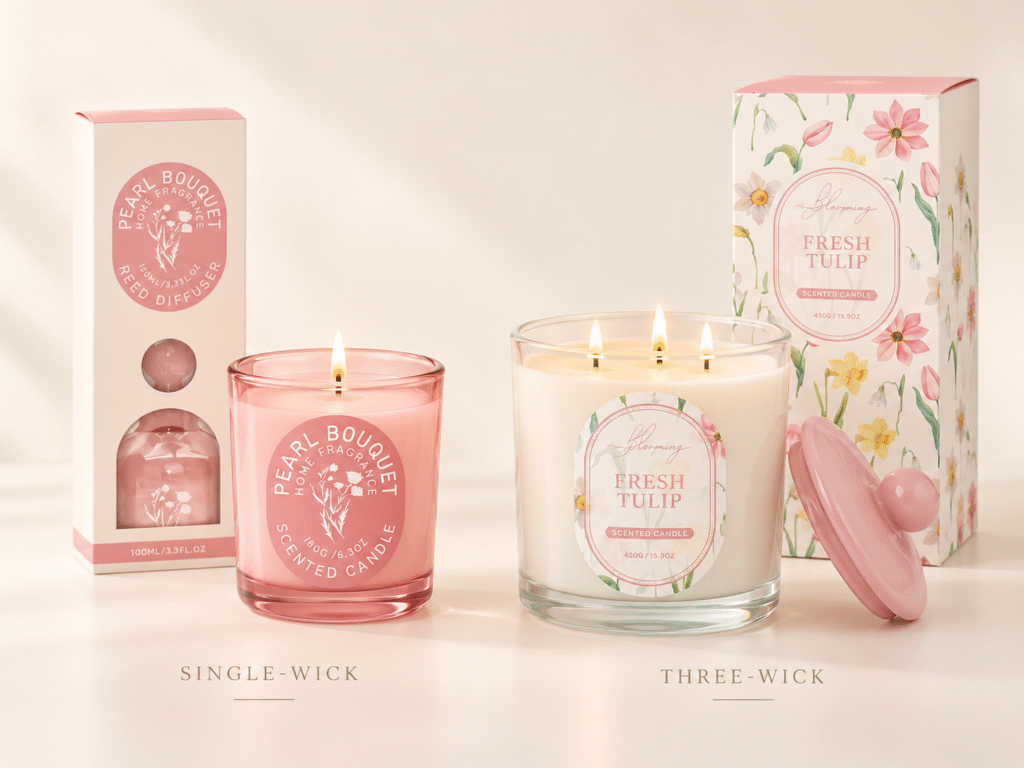
Does a Three-Wick Candle Smell Stronger?
Not necessarily.
A three-wick candle can generate heat across a larger area, which may affect how quickly fragrance is released into the surrounding space. However, perceived scent strength depends on more than the number of flames.
Important factors include:
- Fragrance composition: Different fragrance formulas can produce different scent intensities and release characteristics.
- Wax compatibility: The wax and fragrance must work together in the finished formula.
- Wick performance: Wick size, positioning, and heat output influence melt pool development.
- Container design: The vessel’s dimensions and shape affect the overall burning system.
- Room conditions: Room size, ventilation, and air movement influence how fragrance is perceived.
A three-wick candle may deliver a noticeable fragrance experience, but it does not follow that it will smell three times as strong as a single-wick candle.
Likewise, increasing the number of wicks does not eliminate the need to develop an appropriate fragrance formula.
For buyers developing custom scented candles, the best approach is to evaluate scent performance in the intended product rather than use wick count as a shortcut for predicting fragrance strength.
How Does Wick Count Affect Candle Burn Time?
Burn time depends on how much usable wax the candle contains and how quickly that wax is consumed under the tested conditions.
A three-wick design may consume wax faster than a comparable single-wick design because it uses multiple heat sources. However, the actual difference depends on the complete candle system.
Container dimensions, wax composition, wick specifications, and the criteria used to define the end of the test can all affect the reported result.
Consider two candles with similar wax weights but different wick configurations. Their total burn times cannot be reliably predicted from wick count alone.
For wholesale buyers, burn time should be measured using a documented method rather than estimated solely from the number of wicks.
| Comparison | Single-Wick Candle | Three-Wick Candle |
|---|---|---|
| Heat distribution | Concentrated around one wick | Distributed across three wick positions |
| Melt pool development | Expands from one central area | Multiple melt pools may merge |
| Wax consumption | Depends on the complete formula | May be faster, but requires testing |
| Fragrance performance | Depends on fragrance and burning conditions | May differ because of heat distribution |
| Burn time | Must be tested | Must be tested |
| Development focus | Wick-to-container compatibility | Wick layout and overall system compatibility |
This distinction matters when a brand needs to meet a specific burn-time target or compare two products for a retail collection.
How Should Buyers Choose the Right Wick Configuration?
The most suitable configuration depends on the intended product, not on a universal rule that wider candles must always use three wicks.
Buyers should evaluate several factors together.
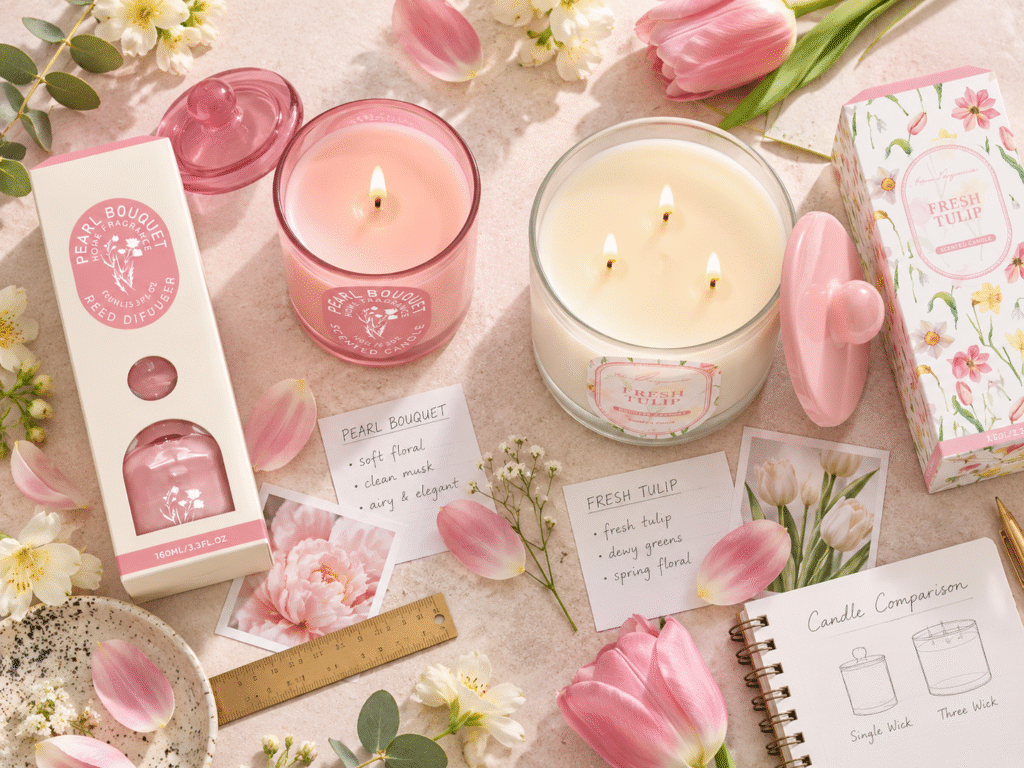
Container Dimensions and Shape
The internal diameter, depth, and geometry of the vessel influence how heat spreads across the wax.
A wider vessel may benefit from multiple heat sources, but the final configuration should be established through testing.
Wax and Fragrance Formula
Different wax blends and fragrances can change melting behavior and wick performance.
A wick configuration that works for one formula may not perform identically when the fragrance or wax changes.
Target Product Performance
Define what the candle needs to achieve before choosing the wick count.
Relevant requirements may include melt pool development, fragrance performance, appearance, burn time, and applicable safety criteria.
Retail Positioning and Cost
A single-wick candle may suit a compact product with a simple design. A three-wick candle may suit a wider vessel intended to create a different visual and usage experience.
Neither configuration automatically represents a higher product grade. The commercial decision should reflect the target customer, product dimensions, cost structure, and expected performance.
For a new collection, buyers can ask their manufacturer to evaluate both configurations when the container and product concept make the comparison meaningful.
What Changes When Moving From Single-Wick to Three-Wick Production?
Changing a single-wick candle into a three-wick version requires more than inserting two additional wicks.
Wick Layout
The position and spacing of the three wicks must be appropriate for the container’s internal geometry.
Uneven spacing can produce an uneven heat pattern, while poorly positioned wicks may affect the burning experience.
Formula and Burning Performance
The new configuration changes the distribution of heat. The existing wax and fragrance formula should therefore be evaluated with the revised wick layout.
A formula approved for a single-wick candle should not automatically be treated as validated for a three-wick version.
Burn Testing
The revised product should undergo appropriate testing based on the changes made and the applicable requirements.
Buyers should review flame behavior, melt pool development, wick performance, soot observations, container condition, and end-of-life behavior as relevant to the product and testing protocol.
For a detailed purchasing checklist, see Candle Burn Testing: What Buyers Should Check.
Production and Cost
Three-wick candles require additional wick materials and may involve more complex positioning and quality-control steps.
The actual cost difference depends on the container, materials, production method, and packaging requirements.
Before confirming a bulk order, buyers should review the specifications, approved samples, pricing, and production schedule for the selected configuration.
What Should Buyers Confirm Before Approving a Candle Sample?
Before approving a single-wick or three-wick candle for mass production, confirm the following:
- Container dimensions, material, and wax weight
- Wick count, type, size, and positioning
- Wax and fragrance formula
- Melt pool development and flame behavior
- Fragrance performance under defined evaluation conditions
- Burn-time results and applicable testing requirements
- Soot observations and container condition
- Performance near the end of the candle’s usable life
- Consistency between the approved sample and production specification
For three-wick candles, pay particular attention to wick spacing and the way the multiple heat sources interact.
Keep a clearly identified approved sample and its corresponding product specification. If the formula, container, or wick layout changes, determine whether additional verification is necessary before continuing production.
Developing Single-Wick and Three-Wick Candles With UN CANDLE
Single-wick and three-wick candles serve different product-design purposes. Neither is universally superior.
The right configuration depends on the container, wax and fragrance formula, desired performance, and the results of appropriate testing.
At UN CANDLE, we support OEM and ODM candle development, including container selection, fragrance customization, wick configuration, sample development, and bulk production.
If you are planning a new candle collection, share your preferred container dimensions, wax weight, fragrance direction, target market, and estimated order quantity.
Our team can discuss suitable development options and the sample evaluation needed for your project.
