
UNCANDLE Buyer Guide
What Are the Most Popular Candle Scents?
The most popular candle scents in the survey varied by generation. Floral and botanical fragrances led among Gen Z (69%), Millennials (60%), and Baby Boomers (54%). Among Gen X respondents, fresh and spice fragrances tied for first at 55% each. These figures come from the 2024 Gifts & Decorative Accessories Study and measure purchase intent.
Fragrance mattered more than price or value in the same market presentation: 95% cited scent as a purchase factor, compared with 75% for price or value. The presentation also reported that 77% of consumers surveyed were likely to buy a candle within the following 12 months. See the National Candle Association’s 2025 market presentation.
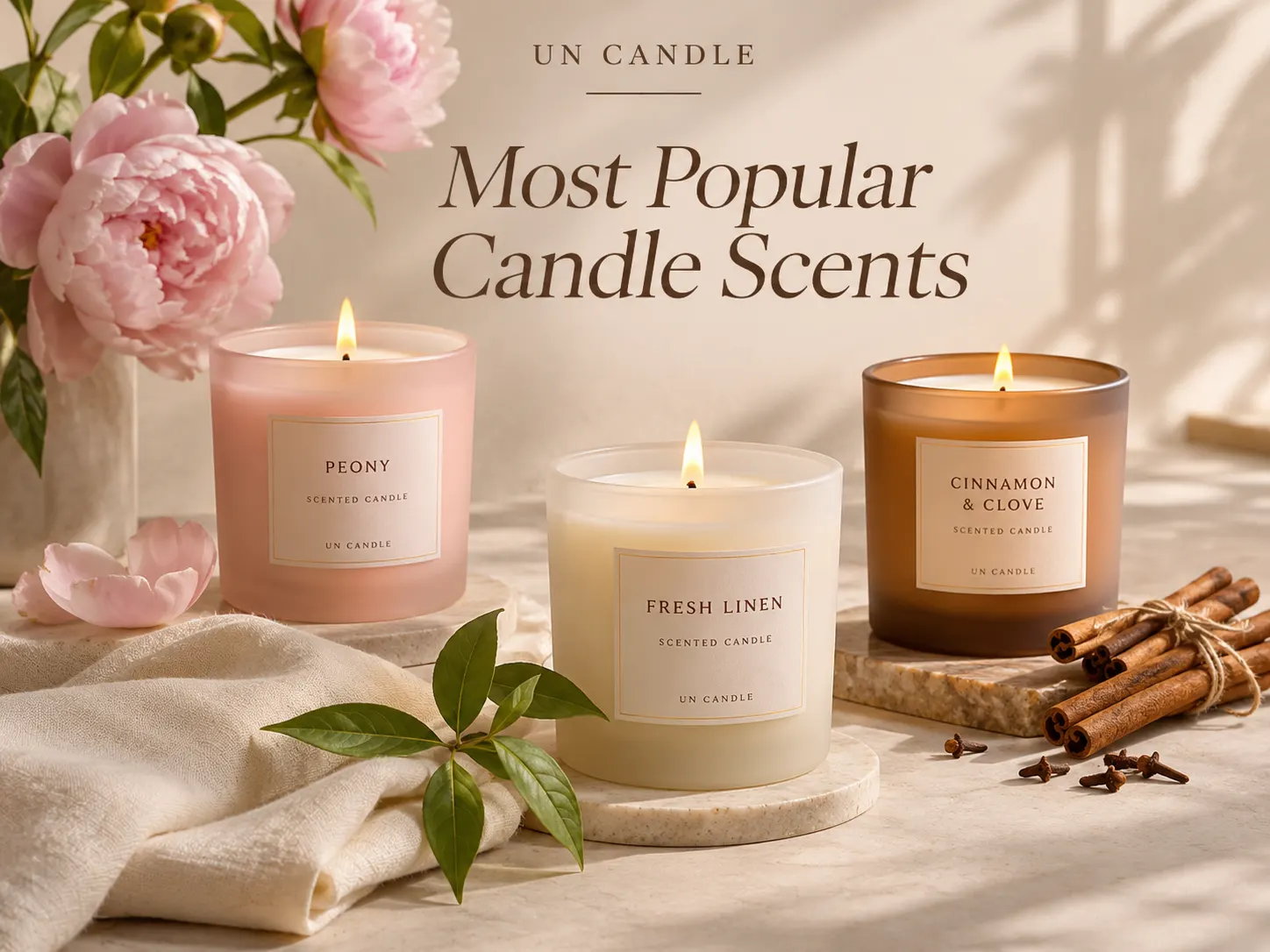
The Top Five Candle Fragrance Families Among Gen Z
The study asked which candle fragrances respondents were most likely to buy in the next 12 months. Here are the five highest shares for Gen Z, with the other three generations shown for comparison. The scent examples illustrate each category.
- Floral or botanical — 69%. Rose, peony, jasmine, and lavender are familiar examples. The share was 60% among Millennials, 53% among Gen X, and 54% among Baby Boomers.
- Fresh — 59%. Fresh fragrances include clean cotton, fresh linen, and fresh cut grass accords. The share was 59% among Millennials, 55% among Gen X, and 46% among Baby Boomers.
- Spices — 54%. Cinnamon, clove, and ginger can give candles a warm, spiced character. The share was 58% among Millennials, 55% among Gen X, and 45% among Baby Boomers.
- Citrus — 51%. Lemon, bergamot, and grapefruit are familiar citrus scents. The share was 51% among Millennials, 53% among Gen X, and 42% among Baby Boomers.
- Food scents — 46%. Vanilla, caramel, and coffee are examples of gourmand scents. The share was 53% among Millennials, 43% among Gen X, and 28% among Baby Boomers.
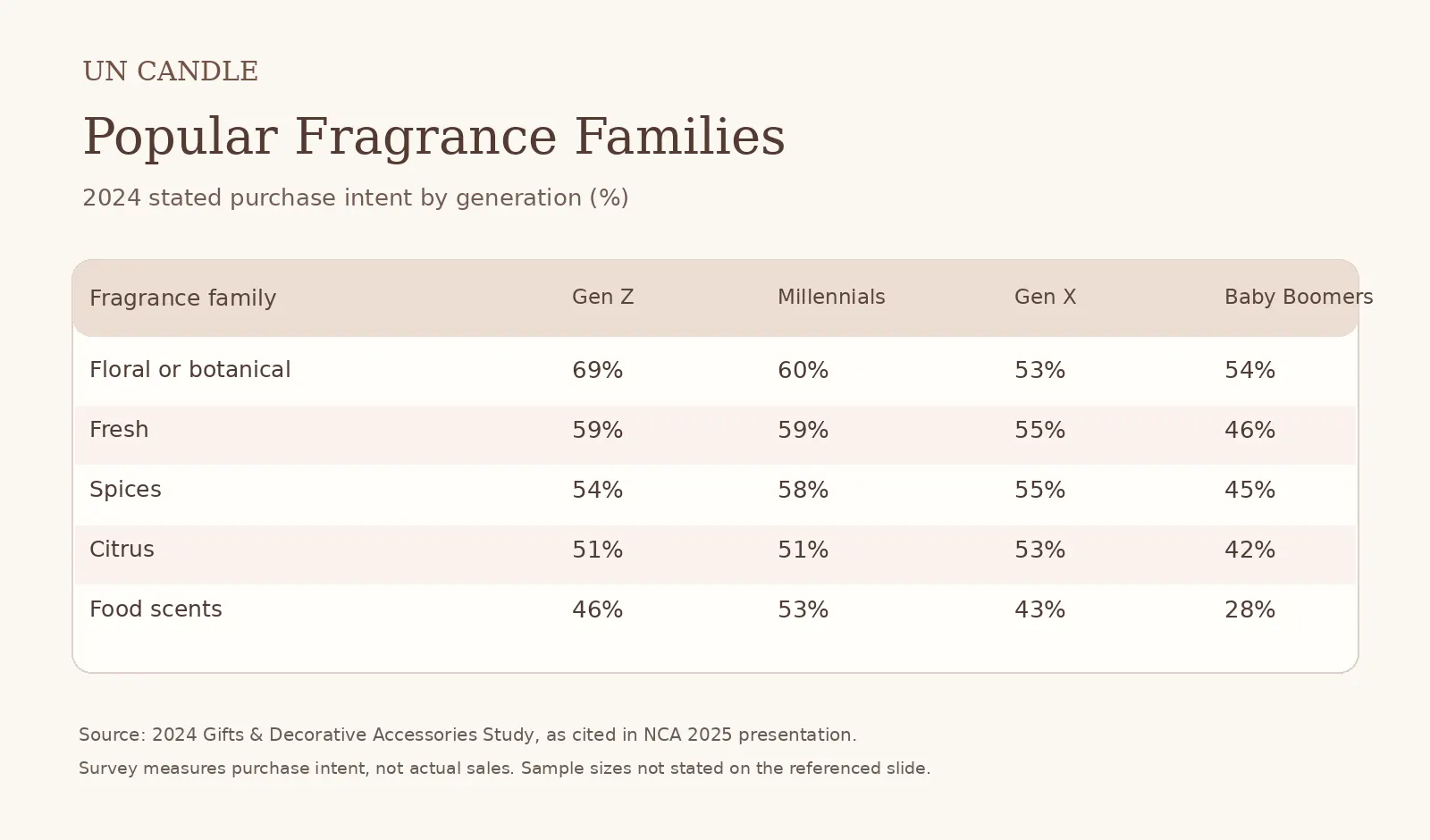
The presentation credits Strategic Insights and the 2024 Gifts & Decorative Accessories Study. It does not disclose the overall sample size or the number of respondents in each generation on the cited fragrance slide. The results show stated purchase intent and provide no global sales ranking or separate sales figures for individual scents.
Which Candle Scents Work Year-Round?
These five scent profiles suit a range of home fragrance collections. If you’re comparing candles for your own home, consider what you want to smell most: something airy like linen, a soft floral, a creamy vanilla, a dry wood, or a bright citrus. If you’re comparing samples for a range, the finished candle is where differences in color, scent throw, and burn behavior become clear.
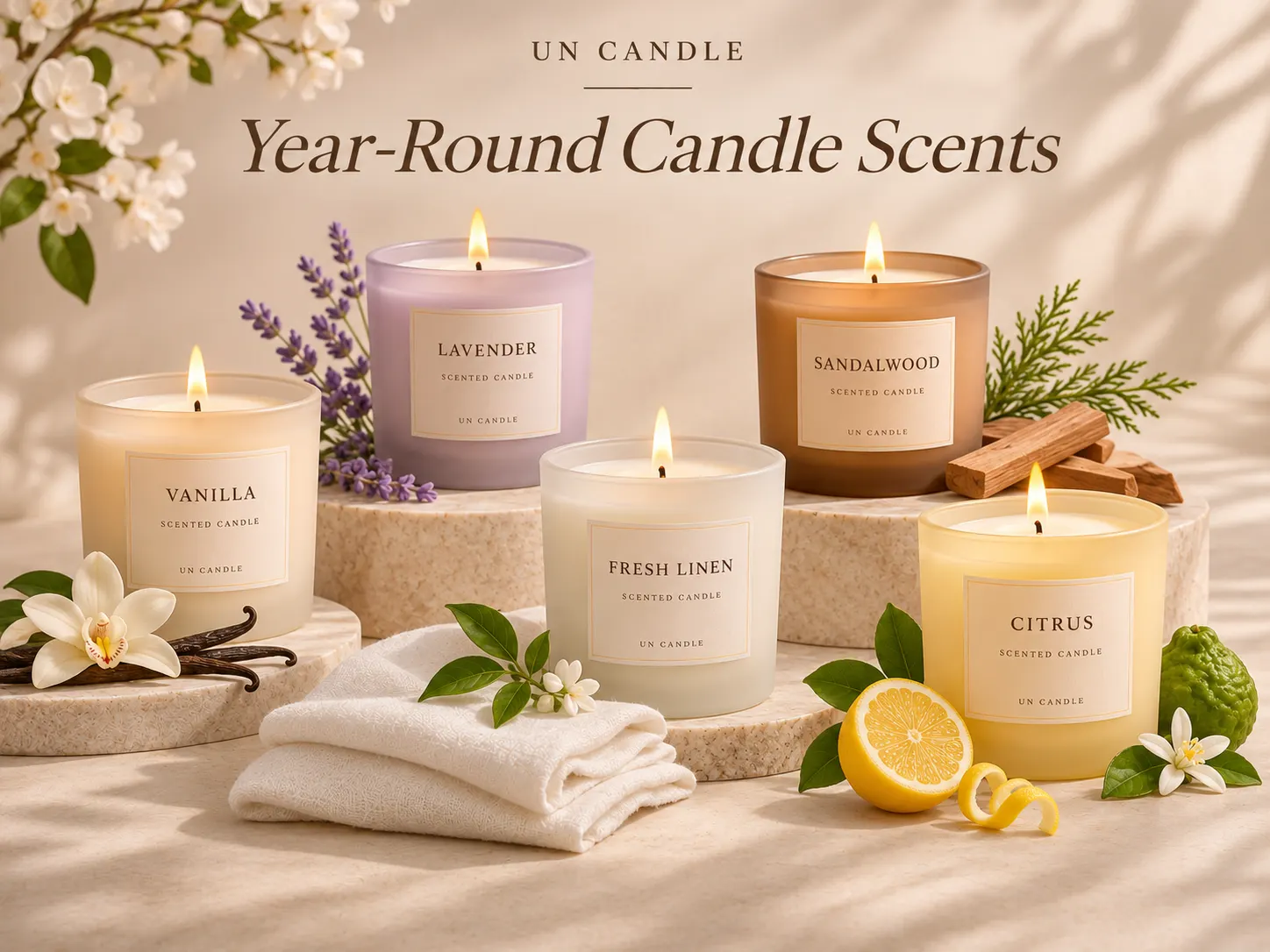
Vainilla
Vanilla candles can smell creamy, sweet, or warm, depending on the blend. Some vanilla fragrance oils contain vanillin, which can turn light soy wax yellow or tan. If you want an ivory vanilla candle, check the cooled sample’s color again after storage before approving it. See CandleScience’s guidance on soy wax discoloration.
Lavender
A lavender candle can lean toward soft floral fragrances or the greener, herbal side of lavender. For EU-bound candles, check whether the fragrance contains sensitizers such as linalool and review their concentrations in the finished mixture. The required CLP labeling depends on that mixture. See ECHA’s candle classification and labeling guidance.
Sandalwood
Sandalwood gives a candle a warm, woody character and can serve as a base note with amber, cedarwood, or vanilla. If you’re comparing woody scents, evaluate them after the same curing period for the chosen wax type. That makes it easier to tell which blend gives the woody fragrance you want under comparable conditions.
Fresh Linen
Fresh linen can smell crisp, powdery, or green. Compare it alongside clean cotton or other fresh scents to see whether the differences are easy to pick up in the finished candle. Green notes can give an airy linen scent a sharper edge.
Citrus
Bergamot, lemon, and grapefruit can give a blend bright top notes. Some citrus fragrance oils can shift the color of pale wax. If the citrus opening is what you like about the scent, smell the candle unlit and then check whether that character comes through while it burns. Use the same wax, wick, and vessel when comparing formulas. See CandleScience’s soy wax troubleshooting guide.
To explore jar styles, browse UNCANDLE’s scented candle range. For supplier and sample comparisons, see where to buy fragrance oil for candles.
Candle Scents by Season
The time of year can help narrow a shortlist. The National Candle Association reports that about 35% of candle sales occur during the Christmas and holiday season. That is a category-level estimate, with no fragrance-level breakdown. See the NCA’s industry facts and figures.
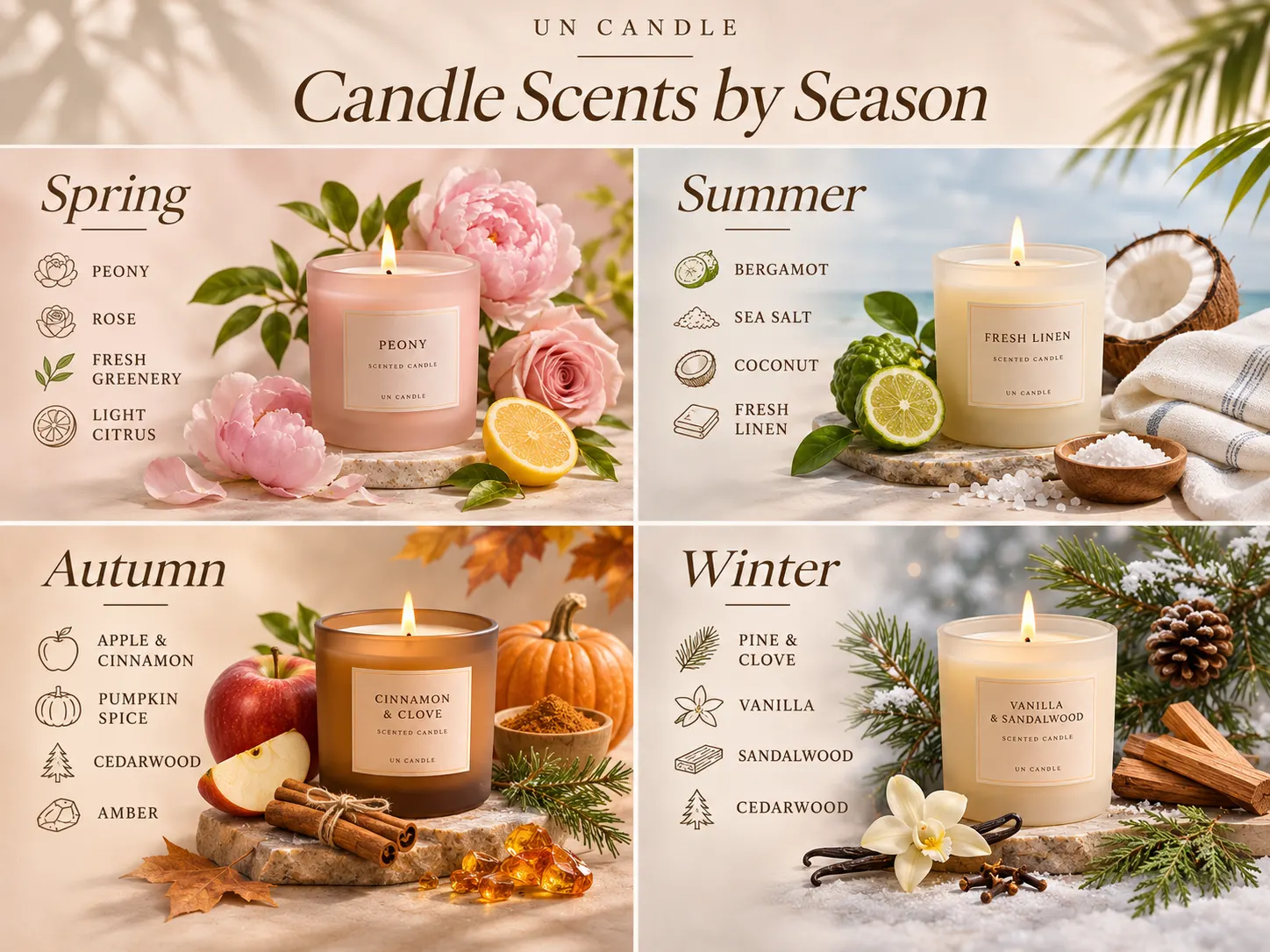
- Spring: Peony, rose, fresh greenery, and light citrus. Floral candles with peony or jasmine are a starting point for spring collections.
- Summer: Bergamot, sea salt, coconut, and fresh linen. Try citrus with green notes if you want a brighter alternative to a sweeter coconut blend.
- Autumn: Apple and cinnamon, pumpkin spice, or cedarwood and amber. Apple and cinnamon gives a warmer, spiced alternative to a straight woody scent.
- Winter: Pine and clove, vanilla and sandalwood, or cedarwood. Pine and clove express a distinct holiday theme, while vanilla and sandalwood can stay in a year-round assortment.
If you’re planning samples, try fresh linen, peony and jasmine, cedarwood and amber, and vanilla and sandalwood as four starting points. Swap in one seasonal blend for a limited launch. For the full selection and evaluation process, see how to choose the right candle scent. If you already have a shortlist, ask UNCANDLE about fragrance samples.
Preguntas frecuentes
Does a candle with a longer burn time have a longer-lasting fragrance?
Burn time measures how long the candle burns. Scent throw describes how noticeable the fragrance is. To judge whether the fragrance holds up, compare how it smells across multiple burn sessions. See what determines a scented candle’s burn time y what to check during candle burn testing.
Can I judge a candle scent from the matching wax melts?
Wax melts can help you decide whether you like the general scent. To judge how it smells in a lit candle, sample the candle itself. Its wax, wick, and vessel all affect how much fragrance reaches the room.
References
- National Candle Association — Home Fragrance State of the Market: By the Numbers (2025)
- National Candle Association — Facts & Figures
- CandleScience — Why Does My Fragrance Oil Discolor My Soy Wax?
- CandleScience — Soy Wax Troubleshooting Guide
- ECHA — Complying with CLP and Other Legal Requirements When Making or Importing Candles