
How to Choose a Private Label Candle Manufacturer
Choosing the right private label candle manufacturer is an important decision for retailers, importers, distributors, hotels and e-commerce candle brands.
A reliable manufacturer should do more than fill wax into a container. The supplier should help you select fragrances, vessels, wax and wicks, create retail packaging, conduct candle burning tests and maintain consistent quality during mass production.
This guide explains how B2B buyers can compare candle manufacturers and select the right production partner for a private label candle collection.
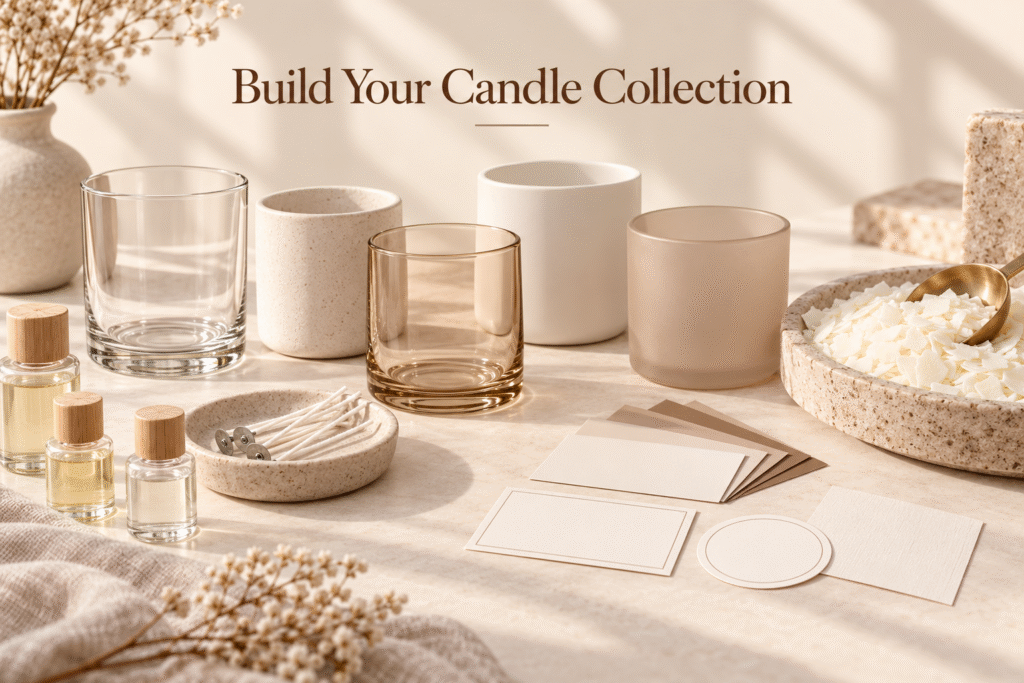
1. Define Your Private Label Candle Project
Before contacting a candle factory, prepare a clear product brief. This helps the manufacturer evaluate product feasibility, sampling requirements, MOQ, cost and production lead time.
Your product brief should include:
- Target market
- Customer group
- Intended sales channel
- Candle type
- Vessel material and size
- Fragrance direction
- Wax and wick preferences
- Target retail price
- Estimated order quantity
- Label and packaging requirements
- Required product testing
- Expected delivery date
Different sales channels have different requirements.
Supermarkets and chain stores may prioritize competitive prices, shelf-ready packaging, stable quality and dependable delivery. Luxury candle brands may focus on exclusive fragrances, premium candle vessels and distinctive gift packaging.
E-commerce brands may need lower starting quantities and protective packaging suitable for individual parcel delivery.
2. How to Evaluate a Private Label Candle Manufacturer
A qualified private label candle manufacturer should offer enough product options to support your first collection and future product development.
Common candle categories include:
- Scented glass jar candles
- Ceramic vessel candles
- Tin candles
- Votive candles
- Tealight candles
- Pillar candles
- Indoor candles
- Outdoor candles
- Seasonal candles
- Luxury candle gift sets
Buyers should also consider whether the supplier manufactures related home fragrance products, such as:
- Reed diffusers
- Car air fresheners
- Liquid air fresheners
- Solid air fresheners
- Passive diffusers
Working with one supplier for candles and home fragrance products can simplify sampling, packaging development, quality control and international shipping.
It also allows retailers and distributors to create coordinated fragrance collections across multiple product categories.
3. Check OEM and ODM Candle Manufacturing Capabilities
Private label production can range from adding your logo to an existing candle to developing a completely customized candle collection.
Ask the manufacturer which elements can be customized:
- Fragrance
- Wax formulation
- Wick type and size
- Candle color
- Glass, ceramic or metal vessel
- Vessel finish
- Lid and accessories
- Logo and label
- Individual packaging
- Candle gift sets
- Export cartons
OEM candle manufacturing is suitable for buyers who already have product designs and detailed specifications.
ODM candle manufacturing is more suitable for brands that need help with product concepts, fragrance selection, vessel design, packaging development or market positioning.
The manufacturer should clearly explain whether each component is standard, semi-customized or fully customized. This distinction directly affects the MOQ, sampling cost and production lead time.
4. Understand the Custom Candle MOQ
The minimum order quantity for private label candles depends on the product design and number of customized components.
A standard glass jar candle with an existing fragrance and printed label usually has a lower MOQ than a candle requiring:
- A custom ceramic vessel
- A newly developed fragrance
- A unique wax color
- Special surface finishing
- A custom lid
- A rigid gift box
Important factors affecting the candle MOQ include:
- Vessel availability
- Fragrance requirements
- Wax and filling specifications
- Number of colors
- Printing method
- Packaging construction
- Number of candle sizes
- Number of SKUs
Selected UN CANDLE programs may begin at approximately 500 pieces. However, the final MOQ depends on the vessel, fragrance, wax, label and packaging requirements.
Buyers should also ask whether different fragrances or colors can be combined within the total order quantity.
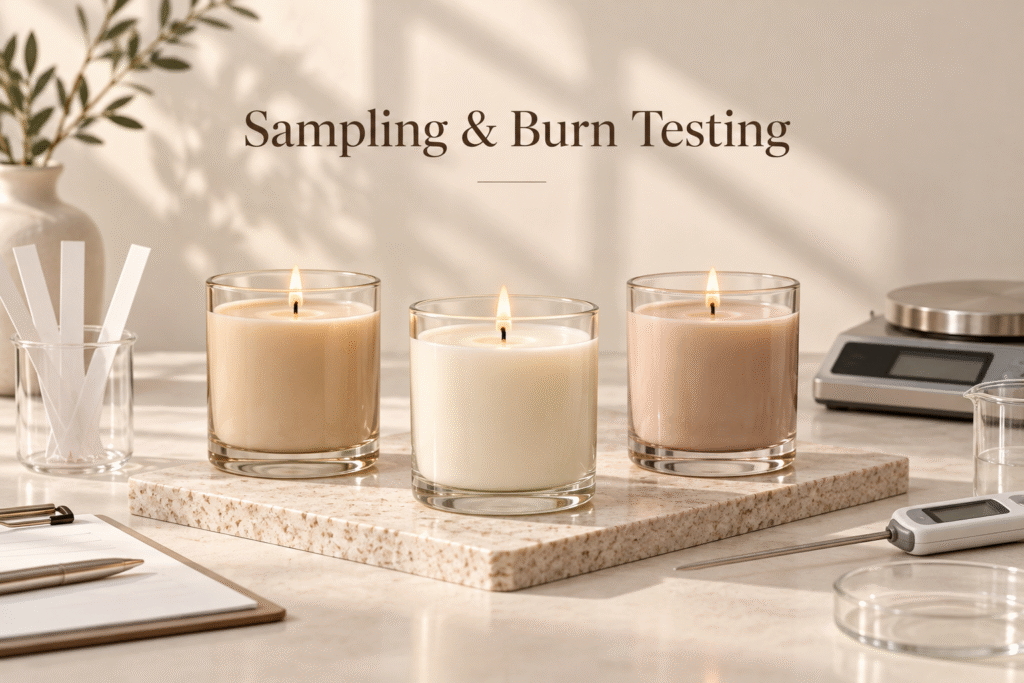
5. Request Custom Candle Samples
Sampling is an essential stage of private label candle development. It allows the buyer to evaluate the product before approving mass production.
Your private label candle manufacturer should prepare samples for reviewing:
- Vessel appearance
- Wax color
- Wax surface
- Cold fragrance strength
- Hot fragrance throw
- Wick position
- Flame stability
- Label placement
- Packaging dimensions
- Overall brand presentation
The first candle sample may require adjustments. Fragrance concentration, wick size, wax color, label position and packaging artwork should be confirmed before bulk production.
Once the final sample is approved, both the buyer and the manufacturer should keep an approved reference sample. This sample can be used as the quality standard for mass production and final inspection.
6. Evaluate Candle Wax, Fragrance and Wick Options
The performance of a scented candle depends on the relationship between the wax, fragrance, wick and vessel.
Common candle wax options include:
- Soy wax
- Paraffin wax
- Coconut wax
- Beeswax
- Vegetable wax blends
- Custom wax blends
Each wax type has different characteristics relating to appearance, fragrance performance, burn time, cost and production stability.
Fragrance selection should also consider:
- Target market preferences
- Intended room or environment
- Desired fragrance strength
- Seasonal direction
- Brand positioning
- Wax compatibility
- Regulatory requirements
The wick should be selected according to the vessel diameter, wax formulation, fragrance concentration and candle color. A wick that is too small may create tunneling, while an oversized wick may produce an unstable flame or excessive vessel temperature.
These elements should be tested together rather than selected independently.
7. Ask About Candle Burning Tests
A candle may look attractive but still perform poorly when burned. Professional candle burning tests are therefore essential before mass production.
The testing process should evaluate:
- Flame height
- Flame stability
- Melt-pool diameter
- Melt-pool depth
- Wick position
- Carbon buildup
- Soot production
- Vessel temperature
- Hot fragrance throw
- Total burn time
- Remaining wax
- Candle behavior near the end of use
Burning tests are particularly important when developing a new vessel, wax blend, wick configuration or fragrance concentration.
Ask whether the candle supplier performs in-house burning tests and whether third-party testing can be arranged when required by your retailer or destination market.
The final product should be tested in the same vessel, wax, fragrance and wick configuration intended for mass production.
8. Quality Control by a Private Label Candle Manufacturer
An experienced private label candle manufacturer should apply quality control throughout the manufacturing process rather than inspecting only the finished candles.
A structured quality-control process may include:
- Incoming raw-material inspection
- Candle vessel and packaging checks
- Wick-position inspection
- Wax-pouring temperature control
- In-process production inspection
- Wax-surface and appearance checks
- Label and artwork verification
- Final product inspection
- Random candle burning tests
- Export carton inspection
UN CANDLE’s stated process includes incoming material checks, in-process inspections, final inspections following AQL requirements and random candle burning tests. Third-party testing can also be arranged according to the buyer’s requirements.
Before placing an order, buyers should agree on acceptable tolerances for fragrance, color, wax surface, vessel appearance, label position and packaging.
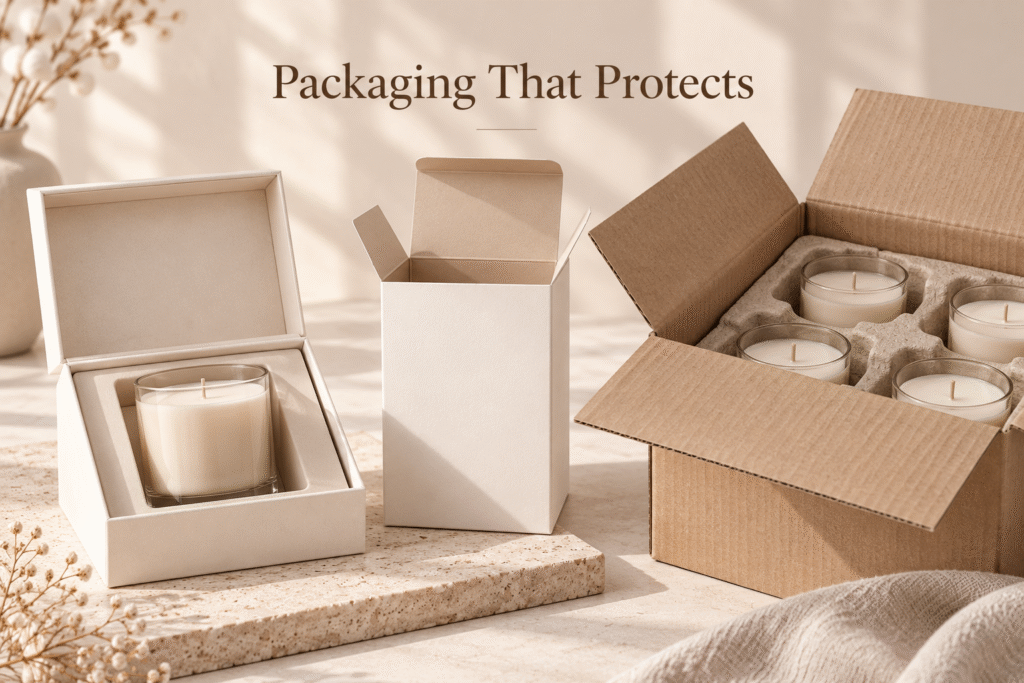
9. Review Custom Candle Packaging
Candle packaging protects the product and communicates the brand’s market position.
Common custom candle packaging options include:
- Printed folding boxes
- Kraft paper boxes
- Window boxes
- Sleeve packaging
- Rigid gift boxes
- Candle gift sets
- Shelf-ready packaging
- E-commerce protective packaging
- Export cartons
Packaging requirements should be planned according to the final sales channel.
Supermarkets and chain stores may need efficient shelf presentation, barcodes, retail labels and shelf-ready cartons. E-commerce candle brands require packaging that protects glass candle jars during individual parcel delivery.
Hotels and gift companies may focus on premium presentation, custom logos and coordinated fragrance collections.
The manufacturer should evaluate both the appearance and protective performance of the packaging before mass production.
10. Confirm Production Lead Time and Capacity
Production time depends on the order quantity, materials, customization level and packaging complexity.
UN CANDLE states that its typical production lead time is approximately 20–45 days after the order and specifications are confirmed. The actual schedule should be confirmed separately for every project.
Ask the manufacturer to provide estimates for:
- Product development
- Sample preparation
- Sample revision
- Artwork approval
- Material preparation
- Mass production
- Quality inspection
- Packaging
- Shipping preparation
Seasonal candle collections should be developed several months before the planned retail launch. Additional time may be required for custom vessels, newly developed fragrances, holiday packaging and international shipping.
Importers and larger retailers should also confirm whether the manufacturer has sufficient production capacity for repeat orders and seasonal volume increases.
11. Choosing the Right Private Label Candle Manufacturer
Price is important, but the lowest quotation does not always provide the best value.
When comparing suppliers, buyers should consider:
- Product development capability
- Candle category experience
- Customization options
- MOQ flexibility
- Sample quality
- Burning-test procedures
- Quality-control standards
- Packaging experience
- Export knowledge
- Production capacity
- Delivery reliability
- Communication efficiency
- Repeat-order support
A dependable manufacturing partner should understand your customers, sales channels and product positioning—not only the specifications of one candle order.
The right supplier should also help you improve existing products and develop new fragrances, seasonal collections and packaging directions based on market feedback.
Private Label Candle Manufacturing with UN CANDLE
Founded in 2006, UN CANDLE provides custom candle and home fragrance manufacturing services for retailers, supermarkets, distributors, importers, e-commerce brands, hotels and promotional gift programs.
Our candle range includes:
- Indoor candles
- Outdoor candles
- Scented vessel candles
- Seasonal candles
- Glass jar candles
- Ceramic candles
- Tin candles
- Candle gift sets
Our home fragrance range includes reed diffusers, car air fresheners, liquid air fresheners, solid air fresheners and passive diffusers.
We support customers throughout the product-development process, including:
- Product concept development
- Custom fragrance selection
- Candle vessel development
- Wax, wick and color customization
- Sampling and burning tests
- Private label development
- Custom candle packaging
- Bulk candle manufacturing
- Quality inspection
- Export packing
- Shipping preparation
- Product improvement
With production resources in China and Vietnam, we can support flexible private label programs, seasonal product development and larger wholesale candle orders.
Frequently Asked Questions
What is the MOQ for private label candles?
The MOQ depends on the candle vessel, fragrance, wax, label and packaging requirements. Selected programs may start at approximately 500 pieces, while fully customized candle projects may require a higher quantity.
Can I develop a custom candle fragrance?
Yes. Fragrance direction and concentration can be developed according to your brand identity, product positioning and target market.
How long does custom candle production take?
Typical production may take approximately 20–45 days after the order, artwork and product specifications are confirmed. Projects involving custom vessels or complex packaging may require additional time.
Can the candle vessel and packaging be customized?
Yes. Buyers can customize candle vessels, colors, fragrances, wax, wicks, labels, logos, individual boxes, gift sets and export packaging.
How is candle quality controlled?
Quality control may include raw-material inspections, in-process production checks, final AQL inspections, packaging checks and random candle burning tests.
Start Your Private Label Candle Project
Working with a reliable private label candle manufacturer can improve product consistency, simplify sourcing and support the long-term development of your candle collection.
Contact UN CANDLE to discuss your product concept, target quantity, fragrance direction, vessel selection, packaging requirements and expected delivery schedule.
