
UNCANDLE Buyer Guide
How to Layer Fragrances for a Unique Scented Candle
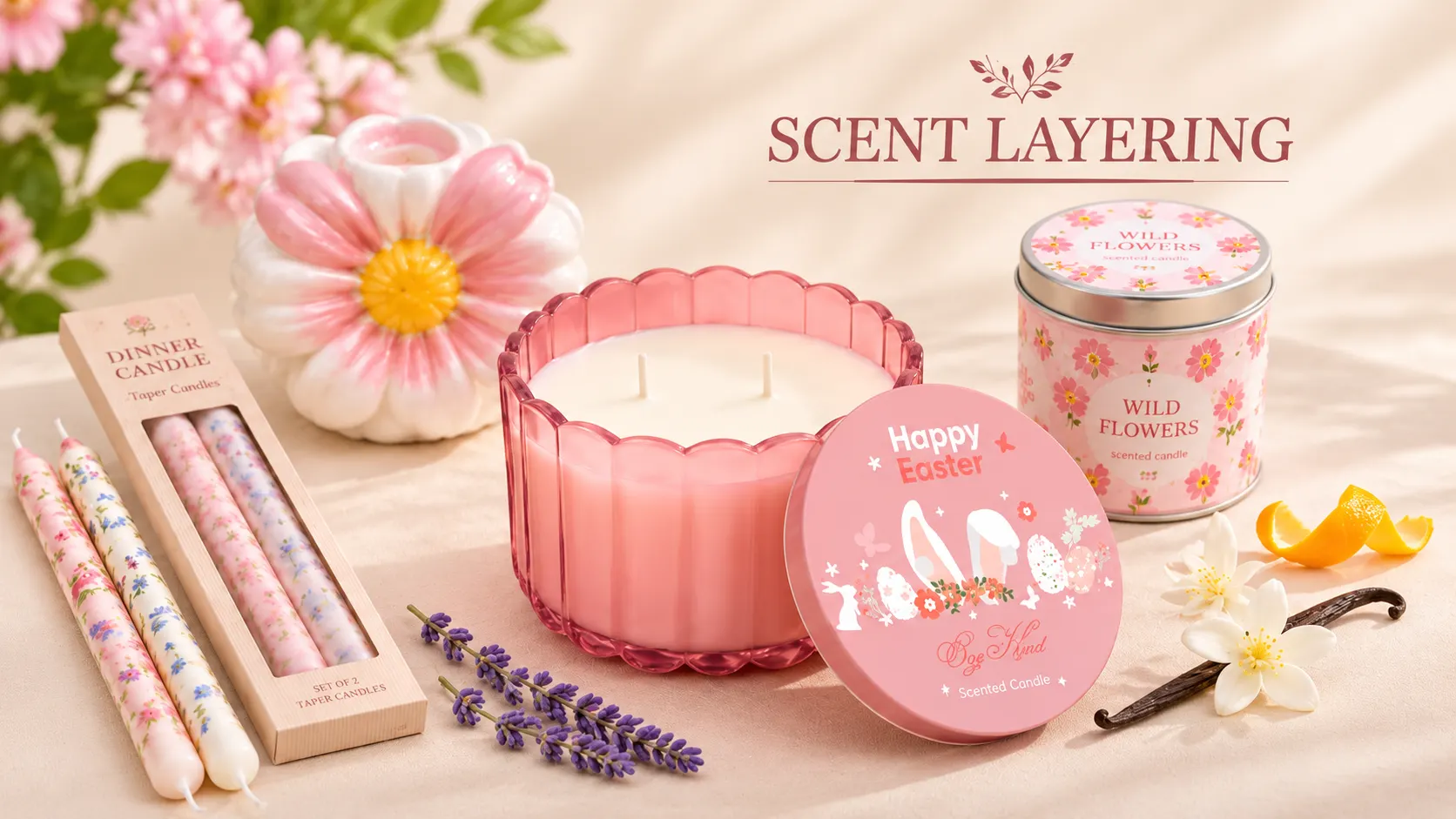
Want to create a candle with your own signature scent? Fragrance layering lets you combine two or more scents to create something unique.
Start with two candle-safe fragrance oils. Choose a main scent, add a supporting fragrance, and try different blending ratios. Then test the blend in a finished candle.
You don't need to pour separate wax layers to create a layered scent. Mixing fragrances and pouring layered wax are two different techniques.
Key Takeaways
- Start simple: Mix two or three candle-safe fragrance oils.
- Know your notes: Top, middle, and base notes describe different parts of a fragrance.
- Try different ratios: Compare a few blends before choosing your favorite.
- Measure by weight: Keep the total fragrance load within your wax supplier's limits.
- Test your candle: A blend that smells good on paper may smell different when burned.
What Does Fragrance Layering Mean in Candle Making?
Fragrance layering means combining scents to create a balanced candle fragrance.
For example, lemon adds a fresh note to a woody scent. Vanilla can make a floral blend feel softer and warmer.
Three terms are worth knowing:
| Term | Meaning |
|---|---|
| Fragrance Blending | Mixing fragrance oils to create a new scent |
| Fragrance Notes | Top, middle, and base notes that describe a fragrance |
| Layered Wax Candles | Candles made by pouring separate layers of wax |
If you want to create a unique scented candle, start with fragrance blending.
You can also add different scents to separate wax layers. However, that requires a different pouring process and additional testing.
What Are Top, Middle, and Base Notes?
Many candle fragrances contain top, middle, and base notes. Each plays a different role in the overall scent.
| Fragrance Note | Main Role | Examples |
|---|---|---|
| Top Notes | Create the first impression | Lemon, Bergamot, Mint |
| Middle Notes | Form the main scent | Rose, Lavender, Jasmine |
| Base Notes | Add depth and warmth | Vanilla, Cedarwood, Amber |
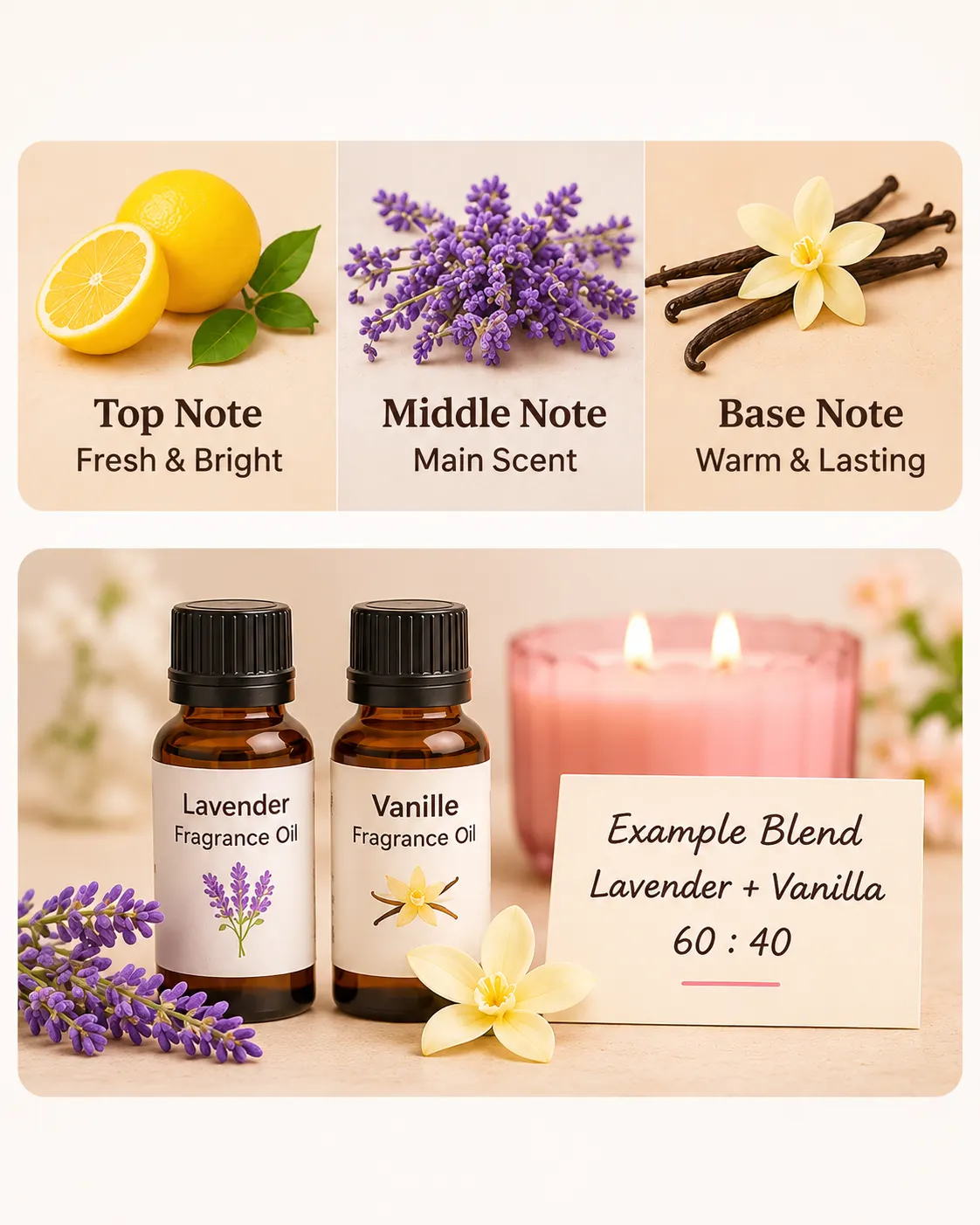
Top notes often contain ingredients that evaporate more quickly. Some base notes last longer and give the scent more depth.
However, these categories are not fixed mixing rules.
A lavender fragrance oil may already contain citrus, floral, and woody notes. You don't need to add all three layers separately.
Instead, use fragrance notes to decide what you want to change. Do you want a fresher opening, a softer floral scent, or a warmer finish?
What Fragrances Work Well Together in Candles?
Good candle fragrance combinations often bring together scents that balance or support each other.
Here are six combinations you can try when developing custom candle scents.
| Fragrance Combination | Scent Character | Candle Style |
|---|---|---|
| Lavender + Eucalyptus | Fresh and herbal | Clean home fragrance |
| Vanilla + Sandalwood | Warm and creamy | Cozy, elegant candle |
| Lemon + Cedarwood | Bright and woody | Fresh everyday candle |
| Rose + White Musk | Soft and floral | Romantic collection |
| Bergamot + Amber | Fresh with warm depth | Modern premium candle |
| Apple + Cinnamon | Fruity and spicy | Autumn or holiday candle |
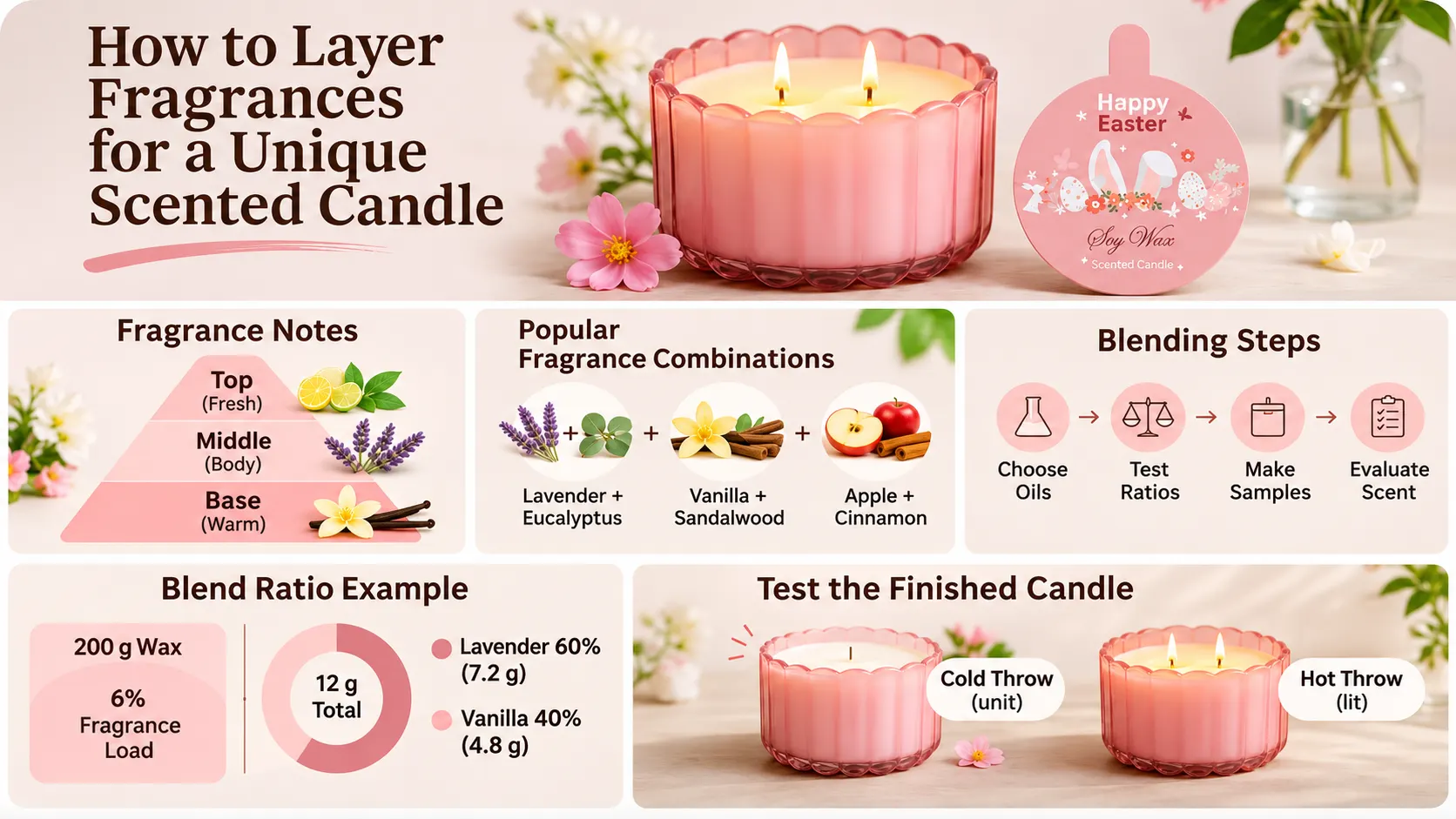
These are scent ideas, not tested formulas.
For your first blend, choose one fragrance as the main scent. Use the second to add freshness, warmth, or softness.
For example, if lavender smells too sharp, try adding a smaller amount of vanilla.
Starting with two oils makes the blend easier to adjust.
How Do You Blend Fragrance Oils for Candles?
You can start blending fragrances with a digital scale, fragrance testing strips, and two candle-safe fragrance oils.
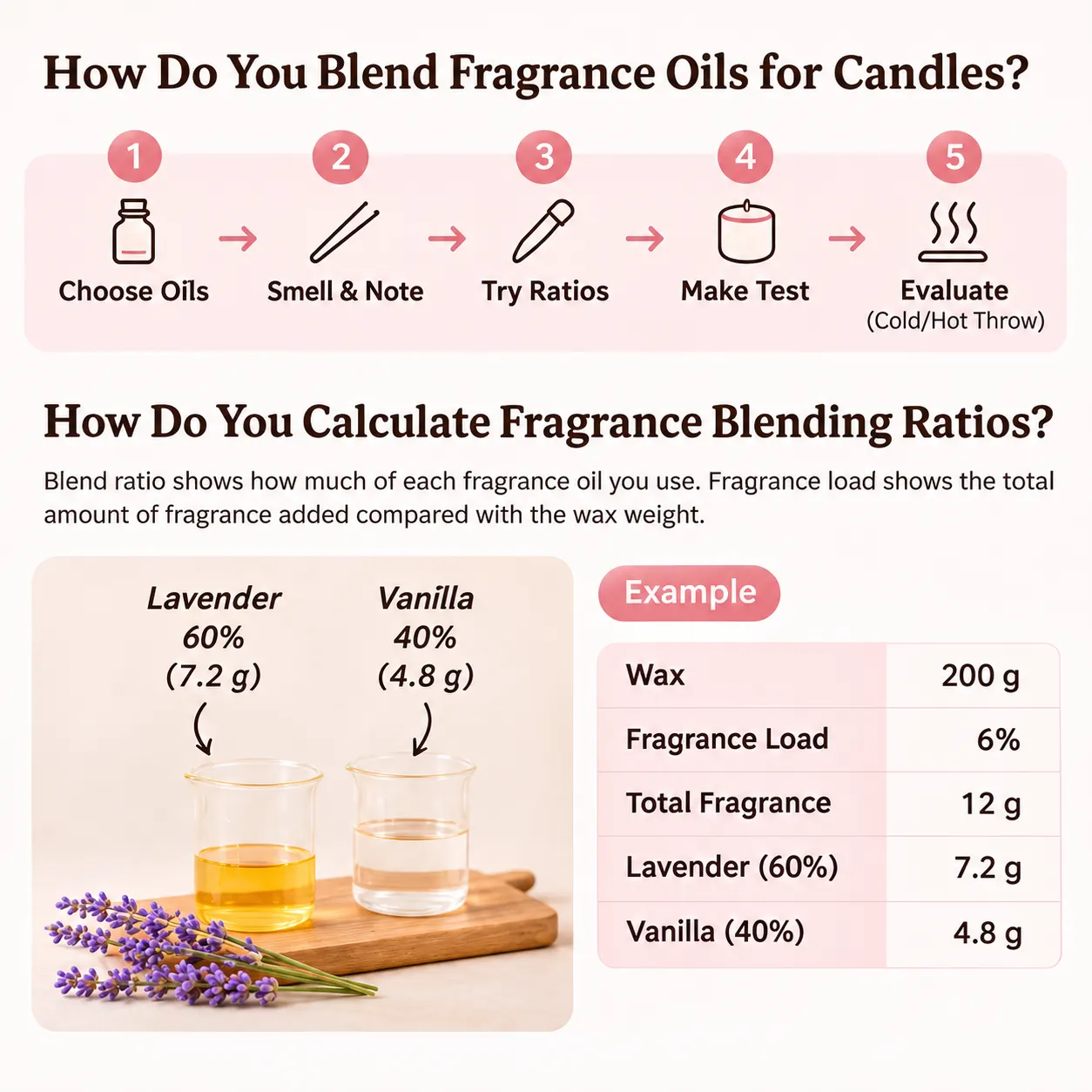
Step 1: Choose Two Candle-Safe Fragrance Oils
Select oils that the supplier recommends for candle making.
Check the usage guidance before mixing. Do not assume that perfume or room-spray oils are safe to use in candles.
Step 2: Smell Each Fragrance Separately
Place a small amount of each fragrance on separate testing strips.
Smell them and write down what you notice. Is one fresh, sweet, woody, or strong?
Check how each scent changes over time.
Step 3: Compare Different Blend Ratios
Try simple ratios such as 50:50, 60:40, and 70:30.
These numbers describe how much of each fragrance you mix. They do not describe how much fragrance goes into the wax.
Compare the blends on testing strips before making candles.
Step 4: Make Small Test Candles
Once you like a blend, weigh the fragrance oils and make a small batch.
Follow the wax supplier's instructions for melting, mixing, and pouring.
Use the same wax, wick, container, and total fragrance load for each test. This makes the results easier to compare.
Step 5: Evaluate Cold Throw and Hot Throw
Let the candles cure according to the wax supplier's guidance.
Then check:
- Cold Throw: How the candle smells when unlit.
- Hot Throw: How the scent performs while burning.
- Scent Balance: Whether one fragrance is too strong.
- Burn Performance: Whether the wick and wax burn properly.
A blend may smell great on a testing strip but perform differently in wax. Always test the finished candle.
How Do You Calculate Fragrance Blending Ratios?
A blend ratio and a fragrance load are not the same thing.
Blend ratio tells you how much of each fragrance oil you use.
Fragrance load tells you how much total fragrance you add compared with the wax weight.
Example: Lavender and Vanilla Blend
Suppose you use 200 g of candle wax with a 6% fragrance load, measured against the wax weight.
First, calculate the total fragrance oil:
200 g × 6% = 12 g
Now divide the 12 g into a 60:40 lavender and vanilla blend.
| Ingredient | Blend Ratio | Weight |
|---|---|---|
| Lavender Fragrance Oil | 60% | 7.2 g |
| Vanilla Fragrance Oil | 40% | 4.8 g |
| Total Fragrance Oil | 100% | 12 g |
| Candle Wax | — | 200 g |
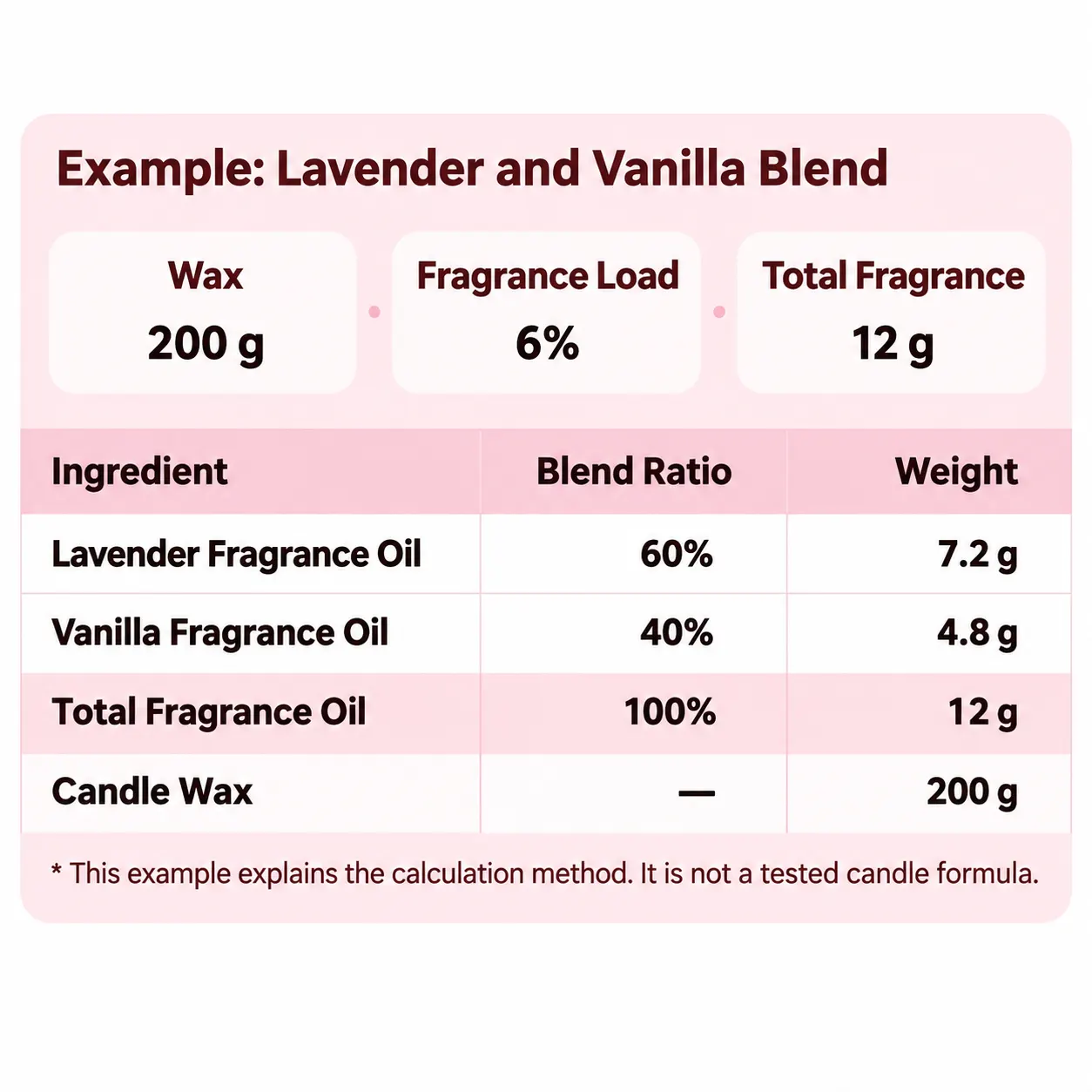
This example explains the calculation. It is not a tested candle formula.
The 60:40 blend means that 60% of the fragrance mixture is lavender and 40% is vanilla.
It does not mean adding 60% fragrance oil to the wax.
The total fragrance load stays at 6%.
Before testing, check the use limits for both fragrance oils and the maximum fragrance load allowed by your wax supplier.
When comparing blend ratios, keep the total fragrance weight the same. This helps you judge the scent balance without changing the overall fragrance amount.
How Can You Test a Fragrance Blend Before Making More Candles?
Mixing the oils is only the first part of fragrance development.
The finished candle must also smell good and burn properly.
| What to Check | Why It Matters |
|---|---|
| Cold Throw | Checks the scent before lighting |
| Hot Throw | Checks the scent during burning |
| Scent Balance | Shows whether one fragrance dominates |
| Wax Appearance | Helps identify oil separation or surface problems |
| Wick Performance | Shows how the candle burns |
| Repeatability | Helps you make the same blend again |
Keep a record of the fragrance names, blend ratio, wax weight, fragrance load, and test results.
Change one thing at a time.
If lavender is too strong, adjust the blend ratio first. Do not immediately add more fragrance oil.
A higher fragrance load does not always produce stronger scent throw. The wax, wick, and fragrance must work well together.
For more information, read Does More Fragrance Oil Make a Stronger Candle?.
What Are the Most Common Fragrance Layering Mistakes?
Even a simple fragrance blend can go wrong.
Here are common mistakes and ways to avoid them.
| Common Mistake | Better Approach |
|---|---|
| Mixing too many fragrances | Start with two or three oils |
| Measuring by drops | Use a digital scale |
| Adding more oil to fix the scent | Adjust the blend ratio first |
| Testing only the fragrance oil | Test the finished candle |
| Ignoring fragrance-use limits | Follow the suppliers' guidance |
| Changing several things at once | Change one variable per test |
Start small and keep your first blends simple.
A good fragrance blend doesn't need many ingredients. It needs a clear, balanced scent.
Frequently Asked Questions About Candle Fragrance Layering
Can you mix two fragrance oils in one candle?
Yes. You can mix candle-safe fragrance oils to create a custom scent. Check the usage limits and test the finished candle before making a larger batch.
What is the best fragrance blending ratio?
There is no single best ratio. Start with 50:50, then try other combinations. Some fragrances work better when one oil makes up a smaller part of the blend.
Does layering fragrances make a candle smell stronger?
Not always. Fragrance layering changes the scent profile. It does not automatically improve scent strength or hot throw.
Can you mix essential oils and fragrance oils?
Some combinations may work in candles. However, each oil must be suitable for candle use. Follow the suppliers' guidance and test the finished formula.
Can you pour different fragrances into separate candle layers?
Yes. This creates a layered wax candle rather than one mixed fragrance. Each layer needs suitable wax and fragrance conditions. You must also test how the complete candle burns.
How Can You Create a Signature Candle Fragrance for Your Brand?
Creating one fragrance blend at home is different from making the same scent across hundreds or thousands of candles.
For a private label collection, brands need a clear fragrance formula and consistent materials.
Before mass production, confirm the fragrance blend, wax, wick, container, and packaging.
Keep a record of the approved formula version and the finished candle sample used for testing.
UNCANDLE supports OEM and ODM scented candle development, including fragrance selection, custom scent development, wax and wick options, sampling, and private label packaging.
If you are planning a signature candle collection, share your fragrance ideas, target market, container specifications, and estimated order quantity.
Contact UNCANDLE to discuss your custom candle project.